Shareholders Approve Providus–Unity Merger, Affirming CBN Reforms in 2025
Providus and Unity merge in a landmark CBN-backed deal, boosting confidence, protecting depositors, and reshaping Nigeria’s banking sector.
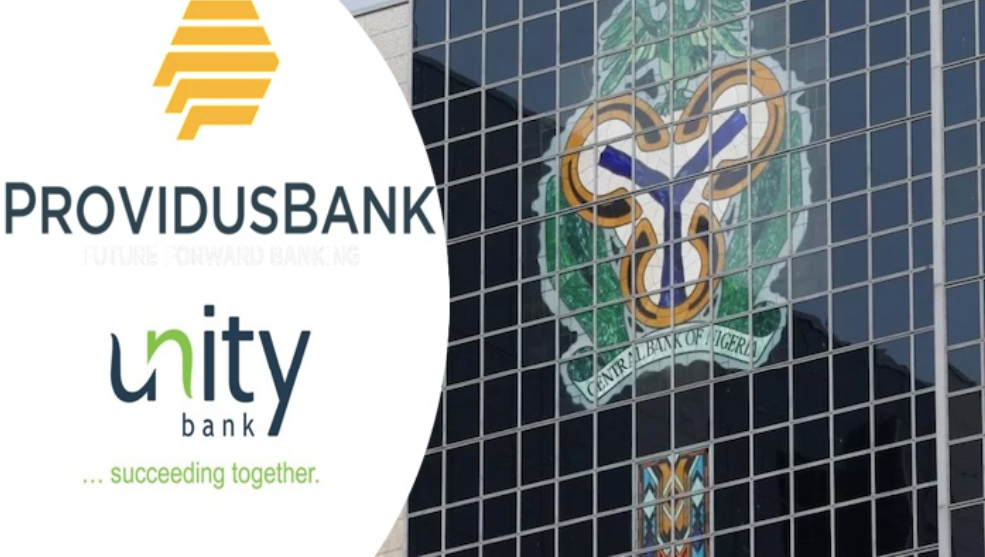
Unity Bank shareholders on Friday approved a landmark merger with Providus Bank in a deal widely regarded as a turning point for Nigeria’s financial sector. The move not only salvages a troubled institution but also underscores the Central Bank of Nigeria’s determination to push through reforms aimed at strengthening the country’s banking industry.
The merger, ratified at a court-ordered meeting in Abeokuta, gives shareholders two options: receive a cash payout of ₦3.18 per share, or opt for a share swap at a ratio of 18 Providus Bank shares for every 17 Unity Bank shares held. With this approval, the long-negotiated transaction now advances toward final regulatory clearance, setting the stage for one of Nigeria’s most significant banking consolidations in years.
The deal is being supported by a ₦700 billion financial accommodation package from the CBN. Structured as a 20-year term loan with a five-year principal moratorium, the facility is designed to stabilize the merged entity and ensure it emerges as a stronger player in Nigeria’s competitive financial landscape. Part of the funds will go toward clearing Unity Bank’s long-standing obligations, including loans tied to the Anchor Borrower’s Programme, NIRSAL initiatives, and other CBN-related interventions.
For many observers, the fact that the apex bank is putting its financial muscle behind the transaction demonstrates how seriously it takes the goal of preventing systemic shocks and safeguarding depositor funds. “This is not just a bailout—it’s a structured intervention,” one senior financial analyst noted. “The CBN is signaling that while it expects banks to meet new capitalization thresholds, it is also prepared to ensure the sector’s stability through orderly mergers rather than chaotic collapses.”
Unity Bank’s financial struggles have been an open secret. The lender had battled with negative shareholders’ funds, mounting liabilities, and eroding confidence. Left on its own, analysts warn, the bank faced the prospect of regulatory sanctions or outright collapse—a scenario that would have rattled depositors and undermined faith in the wider banking sector.
Providus Bank, on the other hand, entered the talks from a position of relative strength. Known for its focus on digital banking, personalized services, and a growing SME portfolio, the bank offered not just financial muscle but also technological expertise. By absorbing Unity Bank’s extensive branch network—particularly in underserved northern regions—Providus gains reach, while Unity secures stability. In short, the merger offered a classic win-win: Unity Bank avoided collapse, Providus expanded its footprint, and the CBN achieved its goal of sector consolidation without triggering panic.
The merger dovetails neatly with the CBN’s recapitalization directive announced in March 2024. Under that policy, Nigerian banks were ordered to raise their minimum capital requirements substantially by 2026. International banks must now meet a capital floor of ₦500 billion, while national and regional banks face correspondingly higher thresholds. The directive immediately sparked speculation of mergers and acquisitions, as weaker institutions scrambled to find partners before the deadline.
For Unity Bank, already on shaky financial footing, the Providus deal presented the only viable path forward. “The recapitalization policy was always going to trigger consolidation,” said Dr. Amina Yusuf, an economist at the University of Lagos. “The Providus–Unity transaction is the first big domino to fall, and more will follow as banks race to meet the new requirements.” By facilitating the deal, the CBN has shown that it intends to balance strict regulatory demands with practical interventions, ensuring that weaker banks are absorbed rather than abandoned.
News of the shareholder approval has been met with cautious optimism. For depositors, the merger provides reassurance. “I was worried about my savings with Unity,” said a small business owner in Kano. “Now that Providus is taking over, I feel more confident that my money is safe.” Among investors, the response has been mixed. Some are pleased with the cash payout option, while others prefer the potential upside of receiving Providus shares.
A few remain skeptical about valuation fairness, arguing that Unity shareholders are being shortchanged compared to the long-term value Providus could generate from the deal. Financial analysts have generally hailed the transaction. “This is a confidence booster for the entire system,” said GTI Securities in a market note. “It shows regulators are proactive, investors are cooperative, and the industry is resilient enough to restructure itself in line with global best practices.”
The Providus–Unity merger carries weight far beyond the two institutions involved. The deal underscores the CBN’s commitment to protecting customer funds by ensuring Unity Bank’s continuity and preventing a repeat of past crises where depositors bore the brunt of bank failures. It is also likely to accelerate other mergers as banks seek to shore up their capital bases. Analysts predict a wave of consolidations in the coming months, especially among mid-tier and regional players.
“This is the first big test of the recapitalization directive, and it passed,” said Olumide Ajayi, head of research at a Lagos-based investment firm. “We can expect similar transactions, and each successful one will make the sector stronger.” For the broader economy, a more robust banking sector means greater capacity to lend to businesses, fund infrastructure, and support growth. The merger also sends a positive signal to foreign investors, who often view banking stability as a proxy for broader economic health.
Despite the optimism, challenges remain. Mergers are notoriously difficult to execute. Integrating IT systems, harmonizing corporate cultures, and consolidating operations across hundreds of branches will require careful management. Any missteps could lead to service disruptions or reputational damage. There are also concerns about moral hazard.
Some critics argue that repeated regulatory bailouts may encourage risky behavior, as banks assume the CBN will always step in to rescue them. The CBN will need to pair its interventions with stricter oversight to avoid sending the wrong signal. Finally, questions linger about long-term viability. Will the merged Providus–Unity entity generate enough revenue to service the ₦700bn facility and still meet shareholder expectations? Success will depend on disciplined governance and strategic growth.
With shareholder approval secured, the next steps involve obtaining final regulatory clearances from the Securities and Exchange Commission and other relevant bodies. The integration process—spanning operations, staffing, branding, and customer communications—will also begin in earnest. Industry watchers will be keen to see how the new entity positions itself.
Will it retain the Providus name and brand identity? How will it leverage Unity Bank’s rural presence while maintaining Providus’s reputation for digital innovation? Equally important is whether the merger sets a template for future consolidations. If successful, it could encourage other banks facing capital shortfalls to pursue similar transactions rather than delay compliance until the 2026 deadline looms.
The Providus–Unity merger may not solve all of Nigeria’s banking challenges overnight, but it represents a significant milestone. It shows that the CBN is serious about recapitalization, that shareholders are willing to compromise for stability, and that Nigeria’s financial system is capable of reforming itself without spiraling into crisis. For depositors, the deal provides safety. For investors, it signals opportunity. For policymakers, it marks progress. As one industry veteran put it: “What we are witnessing is not just the merger of two banks—it’s the merger of policy, practice, and prudence. If Nigeria can get this right, the confidence it will inspire could ripple far beyond the banking halls.”
Read Also: Countdown to 2026: Can Nigerian Banks Survive CBN Recapitalization Deadline?