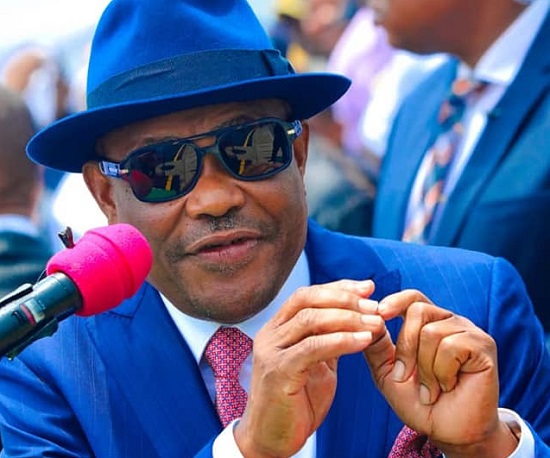
$300m Ogoni Cleanup Fund Sparks Wike, HyperCity Scandal
$300m Ogoni Cleanup Fund Sparks Wike, HyperCity Scandal
Civil society organizations and community leaders in Ogoniland have raised grave concerns over the fate of three hundred million dollars allegedly paid as compensation by the Nigerian National Petroleum Company Limited for decades of oil-related damage in Ogoni territory.
The money, according to their claims, was routed through the Rivers State Government during the administration of former governor Nyesom Wike but has since disappeared without trace. Allegations now swirl that the funds, which were expected to support remediation and community development, may have been diverted into private ventures, with suspicions directed at the rapid growth of the HyperCity supermarket chain in Port Harcourt.
The claims remain unproven, but they have set off a storm of questions about transparency, environmental justice, and accountability in one of the most polluted regions of the Niger Delta.
The controversy is tied to the long and painful history of Ogoni oil exploration. For decades, Shell Petroleum Development Company operated Oil Mining Lease 11, a vast concession covering much of Ogoniland.
Years of oil spills, gas flaring, and environmental degradation provoked resistance, most famously through the Movement for the Survival of the Ogoni People led by Ken Saro-Wiwa. The Nigerian state responded with repression, culminating in Saro-Wiwa’s execution in 1995, yet Ogoni demands for justice never faded.
In 2011, the United Nations Environment Programme issued a landmark report documenting catastrophic pollution in Ogoniland and recommending a multi-decade cleanup program. The Hydrocarbon Pollution Remediation Project was later established to implement the recommendations, but progress has been painfully slow.
Against this backdrop, the announcement that Shell had relinquished OML 11 and that NNPCL would provide a three hundred million dollar compensation package was received with cautious optimism. For many Ogoni, the funds represented not only restitution but also an opportunity to begin rebuilding devastated communities.
That optimism has now turned to anger and suspicion. Ogoni organizations allege that the compensation was not paid directly to the affected communities but was funneled through the Rivers State Government during Wike’s tenure as governor.
They claim no transparent process was undertaken to identify beneficiaries, no project has been traced to the funds, and no consultations were held with Ogoni leaders regarding the management of the money.
Groups such as the Ogoni Liberation Initiative argue that the communities most affected by decades of oil spills remain abandoned, with polluted farmlands, poisoned water sources, and youth unemployment persisting at staggering levels, while the money meant to address their suffering has vanished into opaque channels.
“Our people cannot point to a single borehole, school, or hospital that came from this $300 million,” said Douglas Fabeke, president of the Ogoni Liberation Initiative, in a statement reported by ThisDay on July 18, 2025.
“The NNPCL and the Rivers State Government must tell Nigerians where this money is. We will not rest until a forensic audit is carried out and the truth is revealed.”
Suspicion has been heightened by the rapid expansion of HyperCity supermarkets across Port Harcourt. Within a short period, HyperCity outlets have sprung up in multiple locations, including Eastern Bypass, Tombia Road, Ikoku Junction, and Slaughter Roundabout, alongside plans for a sprawling shopping mall in Abuja.
Wike himself inaugurated one of the HyperCity stores in 2022, hailing it as proof of Rivers State’s attractiveness to investors. To Ogoni groups, the timing and scale of HyperCity’s growth are too convenient to ignore, and they suspect that the compensation funds were redirected to finance the venture.
Though there is no conclusive evidence linking the money to HyperCity, the perception of impropriety has taken root in the public imagination. “We suspect that the Ogoni people’s blood money has been laundered into private supermarkets,” said an activist quoted by The Port City News in May 2025.
Official records show that HyperCity Retail Limited was registered in 2022, with Aleed Construction Limited and Tech Farms & Estates Limited as shareholders. On paper, there is no direct ownership by Wike.
Nevertheless, his presence at HyperCity inaugurations and the belief that politically connected individuals stand behind the company have fueled allegations of a hidden hand. Community leaders note that HyperCity’s ability to expand so quickly, at a time when Rivers State finances were under Wike’s control and when three hundred million dollars of compensation money allegedly changed hands, raises questions that demand urgent answers.
The groups argue that even if the supermarket chain is not directly funded by the compensation package, the Rivers State Government must still account for how the money was spent, since no tangible benefits have reached Ogoni communities.
Voices from Ogoniland express outrage at what they describe as a betrayal. “We cannot continue to suffer while others enrich themselves with our pain,” said an Ogoni youth leader in a report carried by Guardian Nigeria in July 2025.
He added that the communities most devastated by oil exploration still lack clean water, electricity, and schools. “Three hundred million dollars could have changed our story, but instead, it has disappeared.”
Some community activists have threatened legal action to recover the compensation and are demanding federal intervention to prevent further abuse. They call on President Bola Tinubu to order a forensic audit of the payment and to compel NNPCL to disclose exactly how and to whom the funds were disbursed.
For many Ogoni youth, the allegations have deepened cynicism about government promises and have heightened demands for self-determination in managing their own resources. “If we cannot trust government with our money, then we must control our destiny ourselves,” said another activist quoted in Vanguard in August 2025.
Nyesom Wike has so far not directly responded to the allegations linking him to the missing compensation funds. As Minister of the Federal Capital Territory, he has remained an influential figure in Nigerian politics, often dismissing criticisms of his record in Rivers State as politically motivated.
In previous controversies, Wike has insisted that his administration transformed Rivers through infrastructure projects and that his critics are merely opponents seeking to tarnish his legacy. Supporters argue that HyperCity is a private investment unrelated to government finances and that it is unfair to link Wike to the company without documentary proof.
Yet the silence from both HyperCity Retail Limited and the Rivers State Government on the source of the supermarket’s funding has only fueled speculation.
The larger issue, however, is not just about Wike or HyperCity but about the broader failure of accountability in the Ogoniland cleanup. Thirteen years after UNEP’s report, much of Ogoni remains unremediated.
The Hydrocarbon Pollution Remediation Project has faced accusations of mismanagement and delays, with only a handful of cleanup contracts awarded and completed. Many Ogoni villages still lack potable water, farmers cannot cultivate on contaminated land, and fishing has been destroyed by oil slicks.
The three hundred million dollars was meant to be a game changer, a fund that could directly uplift communities while complementing cleanup efforts. Instead, its disappearance reinforces the perception that environmental justice in Nigeria is routinely sacrificed on the altar of corruption and elite capture.
Civil society organizations are now pressing harder for transparency. They argue that the Nigerian state has a duty not only to account for the funds but also to ensure that future compensation and cleanup initiatives are directly managed by community-led structures rather than routed through political offices.
Advocacy groups emphasize that without transparency, the Niger Delta’s long history of oil-related conflict may resurface, as communities lose faith in government promises. Some lawyers representing Ogoni interests have indicated that they may seek court orders to compel disclosure from NNPCL and the Rivers State Government.
Others have called for the Economic and Financial Crimes Commission to investigate the matter, insisting that the diversion of such a large sum cannot be ignored. “If the EFCC fails to act, then we will know that corruption has become the new normal in Nigeria,” Fabeke told journalists in Port Harcourt.
The stakes extend beyond Ogoni. Nigeria’s credibility in managing resource-related compensation is on trial. The country has long been plagued by accusations that oil wealth is misused, fueling militancy, unrest, and distrust between communities and the state.
If three hundred million dollars meant for one of the most devastated regions can vanish without trace, critics argue, then the promise of remediation in the Niger Delta remains an illusion. At a time when the government seeks to attract foreign investment and project a commitment to environmental sustainability, failure to address the allegations could undermine both domestic legitimacy and international credibility.
For the Ogoni people, the issue is deeply personal. Generations have lived with polluted water, destroyed livelihoods, and toxic health conditions. The execution of Ken Saro-Wiwa and eight other Ogoni leaders in 1995 remains a scar on Nigeria’s conscience, symbolizing how far the state was willing to go to suppress calls for justice.
The current allegations, whether ultimately proven or not, revive painful memories of betrayal and dispossession. Activists argue that every missing dollar represents another year of suffering for ordinary people who deserve better. They insist that true peace in Ogoniland will only come when justice is done, when polluters are held accountable, and when resources meant for remediation are used for their rightful purpose.
As the controversy deepens, the unanswered questions linger. Did the Rivers State Government under Wike receive the three hundred million dollars? If so, where is the record of its disbursement? Why were Ogoni communities not formally consulted in the compensation process?
And what explains the sudden rise of HyperCity, with its multimillion-dollar investments, in the same period? Until these questions are answered, speculation will continue, trust will erode, and Ogoni’s long wait for justice will remain unfulfilled.
For now, what stands clear is that an extraordinary sum of money intended to heal the wounds of one of Nigeria’s most devastated regions has instead opened fresh scars, and only transparency, accountability, and political will can close them.
Read Also: Shareholders Approve Providus–Unity Merger, Affirming CBN Reforms in 2025